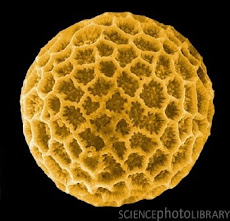
20091031

A palinologia na TNO

A TNO geobiology é uma entidade que entre outras actividades dinamiza trabalhos no âmbito da geobiologia - bioestratigrafia, bases de dados geobiológicas, reconstruções paleoambientais e paleoclimáticas, reconstruções da vegetação e da paisagem.


http://www.tno.nl/content.cfm?context=markten&content=product&laag1=187&laag2=163&item_id=384


Alguns artigos:


http://www.tno.nl/downloads/Applied%20Palynology3.pdf - Applied palynology


http://www.tno.nl/downloads/359beno3.pdf - The role of palynology


http://www.tno.nl/downloads/Why%20the%20past%20is%20a%20key%20for%20the%20future1.pdf - Why the past is key to the future


http://www.tno.nl/downloads/Publication%20List%20TNO%20Geobiology%20Team6.pdf -lista de publicações


20091025

Para descontrair...frases feitas e ciência

- Write to be cited, not to "get published".


- To take a PhD you need to push yourself to your limits. If it was not hard to take your PhD, you did not do it right.


- It is not the academic degree that gives you value, it's the path that you had to take to get it.


- If you think education is expensive, try ignorance. /Derek Bok


- Knowledge is experience. Everything else is just information. /Albert Einstein

20091023

Peat Materials


Materiais com algum interesse para a paleoecologia, nomeadamente o capítulo 4 - Peatlands and Past Climate Change
Disponível no site - http://www.gecnet.info/index.cfm?&menuid=48


Resultados de bolsas de doutoramento

Já estão disponíveis alguns resultados das candidaturas a bolsas de doutoramento.


http://www.fct.mctes.pt/fctsig/default.asp

20091016

EMBS eCBIO - Eastern Mediterranean-Black Sea- Caspian Corridor Biomes

Um projecto muito interessante sobre palinologia de 2007:


AIM

The aim of the Palynology Group (WG-2) on the UNESCO-sponsored IGCP-521 program is to reconstruct changes in vegetation patterns and fire regimes in the Mediterranean-Black Sea-Caspian Sea Corridor over the past 30,000 years (30,000 yr B.P.).


BACKGROUND
The Mediterranean-Black Sea-Caspian Corridor is a complex region, where the influence of changes in climate is modulated by changes in the extent of the Black and Caspian Sea, and by human exploitation. A relatively high density of sites is required to document changes in vegetation cover in sufficient detail to be able to separate these different influences. There have been many new studies carried out in this region since the BIOME 6000 compilation was completed. WG-2 of the IGCP-521 project will synthesise the data from the region. By combining this synthesis with the existing BIOME 6000 database, and with data being collected in the context of BIOME 6000 daughter projects such as PAINand CiMBIO, we should achieve a good coverage of this key region.

METHODOLOGY
The WG-2 is compiling pollen, plant macrofossil and charcoal data from sites in the region between 28-48°N and 22-62°E. An inventory of sites has been established for each data type. The data are initially entered into workbooks. Information about how to complete the workbooks is given in the accompanying User Guide.
Databases have been created for each data type and data base compilation is being carried out in Bristol. These data will be used to reconstruct changes in vegetation patterns and fire regimes. Workshops are planned to explore the use of biomisation techniques for vegetation reconstruction, and to compare the reconstructions with model-based simulations of changes in vegetation and fire regimes since the Last Glacial Maximum.

INTERNATIONAL SYNERGIES
WG-2 will collaborate with PAIN, CiMBIO and the Eurasian Macrofossil Working Group to create mutually-compatible data syntheses for the northern extratropics. It will capitalise on the database of charcoal records being created as part of the IGBP Fire Fast Track Initiative. In addition to existing simulations from the Palaeoclimate Modelling Intercomparison Project (PMIP, PMIP2), palaeoclimate simulations will be provided by QUEST Theme 2 projects ( PalaeoQUMP, QUEST-Deglaciation) and from the NERC Joint Rapid ORMEN project. Simulations with the LPJ-SPITFIRE coupled vegetation-fire model will be run as part of the EU-funded GREENCYCLES and FIRE-PARADOX projects.


Mais informações disponíveis em:

A.A.S.P. NEWSLETTER

A.A.S.P. NEWSLETTER

September 2009, Volume 42, Number 3


http://www.palynology.org/content/nl/nl42-3.pdf


Algumas das notícias da actualidade em palinologia pela A.A.S.P - American Association of Stratigraphic Palynologists

20091013

POLLEN – SO SMALL – SO GREAT: NEW EXHIBITION ON POLLEN AT BERGEN MUSEUM, NORWAY


Welcome to the Micro World: Pollen – so tiny – so great

The new, permanent exhibition "Pollen – so tiny – so great" at the Natural History Collections was opened to the public on Sunday 30 November. We invite you to peer into a fascinating micro world that is otherwise only visible through a microscope.

The new exhibition "Pollen – so tiny – so great" at the Natural History Collections is a knowledge-inspiring and nonetheless beautiful exhibition. You are invited into a fascinating micro world hidden to the naked eye - ordinarily only visible through a microscope.

Pollen grains are extremely small, but in this exhibition they have been magnified and made accessible to us with the help of large 3-dimensional models and images. The exhibition is a new permanent exhibition offered at the Natural History Collections.

Pollen that tell the story about Bryggen (The Wharf)
The pollen grains can be stored for thousands of years if kept in an oxygen-free environment. They build up, layer upon layer, in bogs and at the bottom of lakes thus creating a historical archive the researchers literally can dig (bury) themselves into.
The analysis of pollen from lake sediments and bogs is the single, most important source of knowledge about past vegetation. It tells us something about climate development and human activity. The main features of the development in West Norway’s vegetation from the end of the Ice Age and up to the present are presented in the exhibition. Among the things that were found on Bryggen are pollen grains of exotic plants not common during the Early Middle Ages. This must be a result of importation and can tell us something about when the Bergen population started trade (trading) with Europe.
Professor Knut Fægri (1909-2001) of Bergen Museum and the University of Bergen was one of the pioneers in the development of the pollen analysis during the 1930s and the 1940s. Today, too, the University of Bergen has the largest academic environment in this field in Norway. Associate Professor Kari Loe Hjelle at Bergen Museum has been the expert advisor and driving force for the exhibition.

A Beautiful Exhibition
The exhibition is not only exciting, but also spectacular and beautiful. It is a combination of experience and learning. It consists of large photographs, taken from an electron microscope, illustrations, and models. One of these models is large enough to enter into. The models have been made by the artists Marta Nerhus ( string and paper) and Æsa Bjørk Torsteinsdottir (glass).

The project management has been shared between exhibition architect Turid Mellemstrand and expert advisor Kari Hjelle. Exhibition architect Sonya Reeve has also contributed to the project. The photographs used in the exhibition have been taken by Jan Berge and the adaptation of photographs and illustrations have been carried out by Beate Helle.

Congrès International OFP

16ème Congrès International OFP


Présent et Futur de la Paléobotanique en Europe du Sud-Ouest

9-11 Septembre 2009

NEWSLETTER OF THE INTERNATIONAL FEDERATION OF PALYNOLOGICAL SOCIETIES


NEWSLETTER OF THE INTERNATIONAL FEDERATION OF PALYNOLOGICAL SOCIETIES

20091009

Encontro de Arqueologia da Paisagem e geoarqueologia - HOJE pelas 16h


Importância da palinologia da Lagoa do Saloio na reconstrução paleoecológica da mata do Valado de Frades

Sandra Gomes


As zonas húmidas como lagoas, turfeiras, pântanos, sapais e outros ecossistemas palustres caracterizam-se pelo seu dinamismo e complexidade do ponto de vista geomorfológico sendo por isso também altamente susceptíveis face a eventuais impactos naturais e/ou antrópicos. A área em estudada, em 2007, a lagoa do Saloio, localizada no concelho da Nazaré, encerra uma história de mudanças ecológicas que se foram sucedendo no decorrer do Holocénico.
Esta “história” evolutiva encontra-se preservada nos sedimentos da lagoa, constituindo a sua análise e posterior interpretação elementos irrefutáveis das alterações ambientais naturais ocorridas quer a nível local quer a nível regional. Mais recentemente, mudanças antrópicas terão causado o seu impacto na área em estudo, sobrepondo-se aos processos naturais. O recurso a diferentes disciplinas viabiliza a possibilidade de vislumbrarmos concertadamente o passado, reconstituindo os acontecimentos patentes nas principais mudanças ecológicas da paisagem. Todavia a palinologia de lagoas e turfeiras, devido à fiabilidade dos seus registos, constitui um dos mais importantes métodos na reconstrução da flora, vegetação e ambientes pretéritos (Faegri e Iversen, 1989).
O Homem, como os demais agentes constituintes da biosfera, é um agente modelador/construtor da paisagem. A sua intervenção reflecte-se de um modo mais ou menos gradativo no território, por vezes irreversivelmente. Assim sendo, o território, pode considerar-se como um artefacto, sendo talhado a cada gesto humano, com repercussões ao nível social (com a repetição do gesto) e ao nível do ecossistema, ao alterá-lo do ponto de vista funcional e espacial no decurso da história e evolução humanas (Mateus et al., 2003).
O concelho da Nazaré apresenta registos de ocupação desde há muito, existindo evidências de ocupação Paleolítica no concelho. No decorrer desta apresentação, procederemos a uma descrição das dinâmicas de ocupação humana na região e seu impacto no ecossistema adjacente, no decorrer do Holocénico recente, assente nos estudos polínicos efectuados. Mais concretamente, desde a colonização dos romanos, cujo impacte na vegetação se revelou intenso, abrangente e diversificado (provavelmente devido à instalação de verdadeiros núcleos urbanos), passando pela Idade Medieval com a atribuição de forais, (o que levou à exploração mais intensificada da região do ponto de vista da silvicultura e da agricultura), cujas evidências estão patentes nas curvas polínicas, até à actualidade